Tel: +86-577-86801027 / E-mail: cooper@lianhevf.com
Stainless Steel Fitting
- All
- Product Name
- Product Keyword
- Product Model
- Product Summary
- Product Description
- Multi Field Search
Views: 146 Author: Site Editor Publish Time: 2026-07-23 Origin: Site
High stakes define industrial piping and fluid control systems today. Selecting the wrong valve type often leads to premature wear, catastrophic leaks, or massive system inefficiencies. These mechanical failures compromise worker safety and severely disrupt production schedules. While selecting a corrosion-resistant Stainless Steel Valve is a sound baseline for durability, the internal mechanism dictates overall system performance. A robust body material cannot fix the wrong flow geometry. Whether you choose a ball, gate, or globe design determines how well the system handles pressure, flow rates, and maintenance cycles. This guide bypasses basic definitions to provide a practical, evidence-based framework. You will learn how to evaluate, compare, and specify the correct internal mechanisms for commercial and high-demand applications. By understanding the unique hydraulic behaviors of each type, you can secure reliable operation and prevent expensive downtime.
Stainless Steel Ball Valves offer rapid, quarter-turn shutoff and superior sealing but are unsuitable for precise flow regulation.
Stainless Steel Gate Valves provide minimal flow restriction and pressure drop for on/off applications but are prone to seat damage if used for throttling.
Stainless Steel Globe Valves excel at precise flow regulation and frequent operation but introduce significantly higher flow resistance (pressure drop).
Selection Rule of Thumb: Specify Ball for reliable isolation, Gate for unobstructed bulk flow, and Globe for accurate throttling.
Hidden costs plague misapplied fluid control systems. Engineers often face severe operational penalties when they specify components based purely on line size or budget. Using a gate design for throttling operations serves as a classic failure example. High-velocity fluids squeeze through the partially open wedge. This turbulent flow causes severe wire drawing, ultimately eroding the metal seat. Once eroded, the unit loses its ability to seal entirely. Similarly, installing a soft-seated ball design in a high-particulate environment guarantees rapid failure. Abrasive media tears apart the polymer seals during actuation.
Successful procurement demands rigorous operational analysis. Buyers must balance upfront costs against long-term reliability. Key performance indicators include maintenance intervals, flow coefficient (Cv) requirements, and spatial constraints. Simply upgrading to a 316-grade alloy will not prevent mechanical degradation caused by incorrect flow dynamics. You must evaluate how the internal geometry interacts with your specific fluid over thousands of cycles.
Recognized industry frameworks from organizations like ASME and API stress application-specific selection. They recommend viewing each pipeline as a dynamic environment. Pressure surges, temperature fluctuations, and particulate loads dictate the necessary internal mechanics. Real-world experience proves this approach prevents costly unplanned shutdowns.
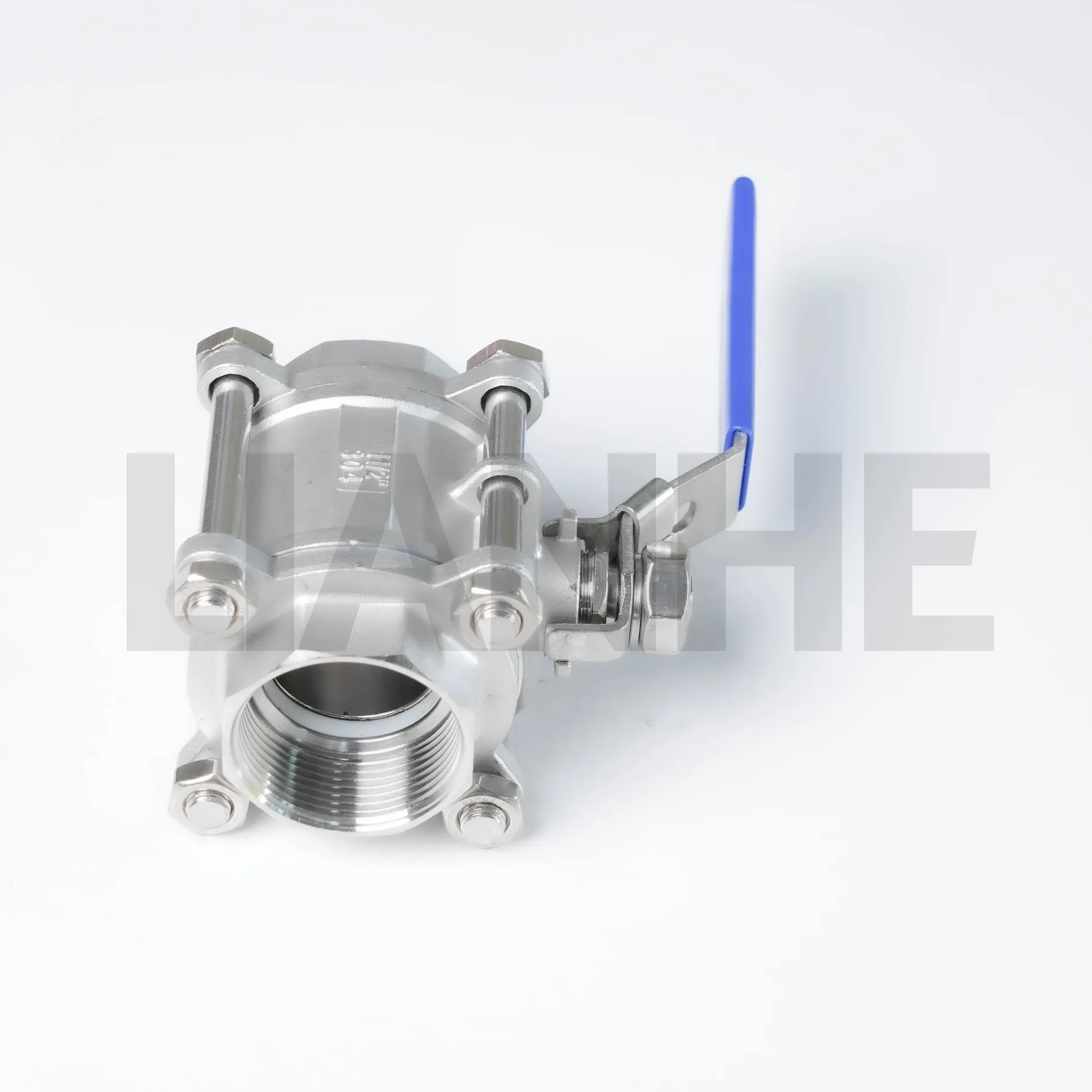
The Stainless Steel Ball Valve utilizes a simple quarter-turn rotary action. A hollow, perforated sphere pivots inside the valve body to control flow. When the bore aligns directly along the pipeline, fluids pass through unimpeded. A 90-degree turn halts the flow completely.
This design excels at zero-leakage shutoff. It provides incredibly fast actuation. Engineers deploy them extensively in clean fluid and gas applications where reliable isolation is critical. Soft seats, typically manufactured from PTFE or Teflon, form a tight seal against the polished sphere. This mechanism creates bubble-tight isolation even after extended periods of inactivity.
However, specific implementation risks exist. Fast closure creates massive hydraulic shock in high-velocity liquid lines. This phenomenon, known as water hammer, damages pipe supports, ruptures gaskets, and compromises system integrity. Operators must train personnel to actuate manual levers slowly. Automated setups require actuators configured for controlled closure speeds.
Operating via multi-turn linear motion, the Stainless Steel Gate Valve lowers a solid wedge directly into the fluid path. Raising the wedge entirely clears the channel. This mechanism creates an exceptionally straight-line flow profile.
We specify this type when pipelines demand minimal pressure drop. The fully unobstructed bore prevents material buildup, making it ideal for slurries, viscous media, and bulk fluid transfer. Because the internal channel matches the pipe diameter, it supports pipeline pigging operations effectively.
Despite these flow benefits, operators face notable drawbacks. The multi-turn stem requires significant time to actuate fully. They are entirely unsuitable for flow regulation. Leaving the wedge partially open exposes it to intense fluid velocity. The unsupported wedge vibrates violently, chattering against the seat. This vibration causes severe mechanical wear, permanent scoring, and guaranteed eventual leakage.
Engineers rely on the Stainless Steel Globe Valve for dynamic fluid control. It uses a multi-turn linear motion. A rounded plug lowers against a parallel seating ring situated in the middle of the body. The internal geometry forces fluids to navigate a distinctive Z-shaped path.
This proportional relationship between the plug position and flow volume allows for precise regulation. It remains the absolute best choice for throttling applications, frequent operation, and scenarios demanding high-pressure drops. The robust plug and seat design withstands continuous fluid impingement better than any other standard option.
The operational trade-off involves energy efficiency. The tortuous internal flow path creates inherently high flow resistance. Pumps must work harder to overcome this friction. Additionally, the complex casting process and taller stem profile require a larger physical footprint. They also weigh significantly more than comparable ball or gate designs.
Directly comparing technical specifications highlights the distinct capabilities of each design. We use flow resistance, sealing integrity, and actuation speed as primary metrics.
Valve Performance Comparison Chart
Performance Metric | Ball Design | Gate Design | Globe Design |
|---|---|---|---|
Flow Resistance (Cv) | Near Zero (Full Port) | Near Zero | High (Significant Drop) |
Sealing Integrity | Excellent (Soft Seats) | Good (Metal/Wedge) | Excellent (Metal Plug/Seat) |
Actuation Speed | Fast (90-Degree Turn) | Slow (Multi-Turn) | Slow (Multi-Turn) |
Primary Function | On/Off Isolation | On/Off Bulk Flow | Precise Throttling |
Flow coefficient (Cv) defines the volume of water passing through the valve at a one-psi pressure drop. Full-port ball and gate designs deliver exceptionally high Cv values. Their straight paths minimize turbulence and conserve pumping energy. Conversely, the globe design forces fluid to change direction twice. This restricts flow heavily and lowers the overall Cv value.
Sealing integrity varies based on seat material. Ball designs utilize pliable materials like PTFE or PEEK. These polymers conform to the sphere, guaranteeing bubble-tight shutoff. They handle standard temperatures perfectly. Gate and globe models generally utilize metal-to-metal seating. These rigid seats tolerate extreme temperatures and highly abrasive media, though they may permit minor Class IV leakage over time.
Actuation speed directly impacts system safety. The 90-degree fast actuation of a ball type offers immediate emergency isolation. Engineers must implement surge protection to mitigate sudden pressure spikes during fast closure. The multi-turn operation of gate and globe types naturally prevents this risk. Their gradual closure allows fluid velocity to decrease safely.
System longevity depends heavily on proactive maintenance and understanding predictable wear patterns. Each design presents unique serviceability challenges.
Globe valves generally offer straightforward in-line maintenance. Technicians can unbolt the bonnet to access the plug and seat directly from the top. They can lap the seating surfaces or replace the plug without cutting the body out of the pipeline. Standard ball types present a different reality. You typically must remove one-piece or two-piece bodies entirely to replace internal seals. To solve this, facilities often install three-piece bodies. These allow the center section to swing out for quick seal replacements.
Wear vulnerabilities differ fundamentally across designs. Common failure modes include:
Scoring on Wedges: Gate types suffer deep metal scoring if forced to close against high-velocity flows or trapped debris.
Packing Degradation: Multi-turn stems in gate and globe models experience constant friction. This friction eventually degrades the graphite or PTFE stem packing, leading to fugitive emissions.
Soft Seat Extrusion: High temperatures or excessive pressure can deform the polymer seats inside ball units, causing them to leak permanently.
We must analyze initial costs against lifecycle ROI. Large diameter ball units cost significantly more upfront than equivalent gate units. However, their superior longevity in pure isolation applications quickly offsets the initial investment. Fewer seal failures and zero-leakage performance reduce long-term maintenance labor. Conversely, utilizing a cheap gate design for flow regulation guarantees frequent, expensive replacements.
Navigating the procurement process requires a logical, step-by-step approach. Use the following framework to narrow down your options based on empirical system data.
Identify the Primary Function. Determine if the operational goal requires isolation or regulation. Choose ball or gate designs for strict on/off duties. Select globe designs when you need to adjust flow rates dynamically.
Analyze Media and Environment. Document your fluid characteristics. Evaluate particulate levels, viscosity, and chemical aggressiveness. Match these traits to the seating materials. Verify the necessary temperature and pressure ratings against ASME Class 150, 300, or higher specifications.
Evaluate Space and Actuation Constraints. Measure the physical installation footprint. Globe bodies require more vertical clearance for their extended stems. Determine if you need pneumatic or electric actuation. Ball types automate easily and cost-effectively due to their low torque, quarter-turn requirements.
Your immediate next step involves formal verification. Always consult piping and instrumentation diagrams (P&ID) before finalizing a purchase order. Reviewing compliance requirements against API 608, API 600, or AWWA standards ensures optimal safety. When facing borderline parameters, engaging a fluid control specialist prevents costly specification errors.
No single valve design solves every engineering challenge. System mechanics demand specific geometries to handle distinct operational rigors. The globe design remains unmatched for precise flow control and durability under throttling conditions. The gate design delivers reliable, unobstructed bulk flow for slurries and low-pressure-drop requirements. The ball design provides the fastest, most reliable zero-leakage shutoff available.
Buyers must prioritize system parameters over upfront unit costs. Focusing exclusively on purchase price inevitably leads to rapid wear and expensive downstream failures. Align your media type, pressure rating, and actuation needs with the correct internal mechanism.
Take action today to secure your piping infrastructure. Browse comprehensive product catalogs by type, download technical Cv sizing charts, or reach out directly to engineering sales teams for application-specific consulting.
A: Standard ball designs should never handle throttling duties. The partially open position exposes the soft PTFE seats directly to high-velocity flow. This exposure erodes the polymer quickly, causing permanent leaks. However, specialized V-port ball designs feature reinforced, contoured cutouts specifically engineered for precise flow regulation.
A: Globe types require complex, intricate internal castings to create their Z-shaped flow path. Manufacturers must also use heavier, thicker body materials. This added mass is necessary to withstand the intense pressure drops, vibration, and turbulent forces inherently associated with flow regulation and throttling duties.
A: Fast-closing quarter-turn ball designs pose the highest risk for water hammer. Slamming the lever shut instantly halts fluid momentum, sending a destructive shockwave backward through the piping. The slow, multi-turn action of gate and globe designs naturally mitigates these surge pressures by gradually reducing fluid velocity.
A: Grade 316 is generally superior because it contains added molybdenum. This specific alloying element dramatically increases resistance to pitting and crevice corrosion. Engineers strongly specify 316 over 304 for high-chloride environments, marine applications, and aggressive chemical processing lines to ensure maximum operational longevity.