
Tel: +86-577-86801027 / E-mail: cooper@lianhevf.com
Stainless Steel Fitting
- All
- Product Name
- Product Keyword
- Product Model
- Product Summary
- Product Description
- Multi Field Search
Views: 0 Author: Site Editor Publish Time: 2025-06-18 Origin: Site
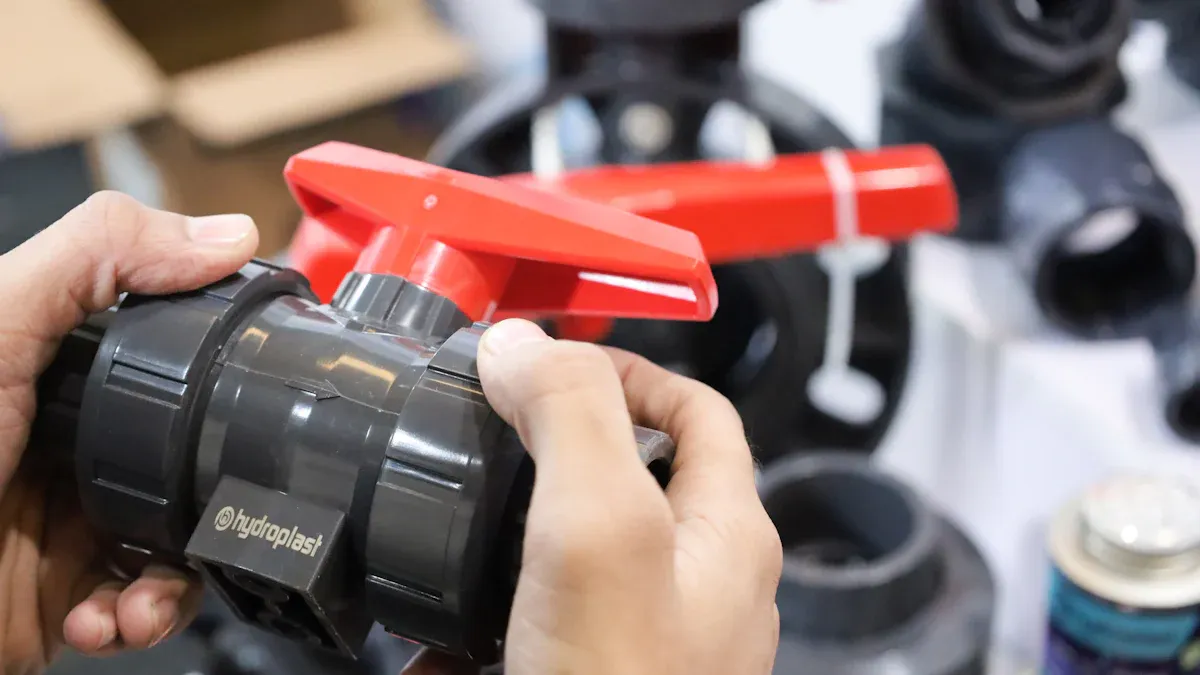
You use a ball valve to control the flow of liquids and gases in pipes. This device gives you strong shut-off power with a simple turn. You find ball valves in plumbing, HVAC, and many industrial systems. These valves offer reliable performance in both homes and factories. The need for ball valves keeps growing around the world.
The global market for ball valves is projected to reach USD 19.56 billion by 2034.
The market size will grow from USD 12.41 billion in 2025.
The expected annual growth rate is 7.88% between 2026 and 2034.
Ball valves let you control liquid and gas fast with a short turn. They are strong and last a long time, sometimes 10 to 20 years if you take care of them. Ball valves seal well, so they stop leaks even when pressure is high. You can use them in plumbing, HVAC, and factories. Pick ball valves for emergencies to keep things safe and working well.
A ball valve helps control how liquids or gases move in pipes. It is simple to use and easy to fix. You can see ball valves in houses, factories, and chemical plants. The main parts are the body, ball, seats, stem, and handle. Each part helps the ball valve work well and safely.
Here is a table that shows different types of ball valves and their main parts:
| Type of Ball Valve | Components | Functionality |
| One-piece | Body and end connections made from one piece | Less chance for leaks; smaller opening can lower pressure; usually replaced, not fixed. |
| Two-piece | Two parts joined with bolts or threads | Has a full opening, so no pressure drop and more flow. |
| Three-piece | Two end caps and one body | Easy to clean and fix; used in food and medicine factories. |
Ball valves can be made from different materials. Stainless steel is good for places with chemicals or high pressure. Brass is used for water and air. Plastic types like PVC or CPVC are best for low-pressure jobs, like cleaning water.
Stainless steel: Good for places with chemicals or high pressure.
Brass: Works for water, air, and safe fluids.
Plastic (PVC, CPVC): Used for chemicals or water cleaning in low-pressure pipes.
You turn the handle to spin a ball inside. The ball has a hole in the middle. When the hole matches the pipe, liquid or gas can move through. If you turn the handle sideways, the ball blocks the flow. This lets you open or close the valve very fast.
The table below shows how the inside parts help control flow:
| Feature | Description |
| Rotating Ball | The ball has a round hole that lines up with the pipe to let fluid move. |
| Quick Opening and Closing | The design lets you open or close it fast, which is good when you need to stop flow quickly. |
| Flow Regulation | Most ball valves do not control flow exactly, except for special types like V-ball valves. |
Full port ball valves let a lot of liquid or gas move because the opening is as big as the pipe. Reduced port ball valves slow things down a little, which is fine for many uses. Most ball valves can handle high pressure, sometimes over 100 barg, and they do not leak much.
Tip: Ball valves are great for quick shut-off and strong sealing, so many people use them in different systems.
People use a ball valve to stop water or gas in pipes. This valve lets you turn off the flow very fast. You only need to turn the handle once to close it. When you do this, water or gas stops moving right away. Ball valves are good for shutting off pipes during repairs or emergencies. Plumbers like these valves because they work with many fluids. You can use them for water, gas, and more.
Here is a table that shows why people pick ball valves for plumbing shut-off:
| Reason | Description |
| Quick and Easy to Use | You only need a single twist to operate, which helps in emergencies. |
| Built Strong and Lasts Long | Made from brass or stainless steel, these valves last for years. |
| Stops Leaks Better | The strong seal reduces leaks and saves you money. |
| Works Well With Many Fluids | You can use them for water, gas, and other liquids without changing their quality. |
| Fits In Any Setup | You find them in many sizes and shapes for different plumbing systems. |
| Easy to Spot and Operate | The lever handle is easy to see and use, even in a hurry. |
| Doesn’t Need Much Attention | After you install them, they need little maintenance. |
| Why Plumbers Prefer | Plumbers like them for reliability and easy installation. |
| A Good Choice for Homeowners | Homeowners find them cost-effective and dependable. |
Tip: If you want to block off part of a pipe or change where water goes, a ball valve is a simple and safe way to do it.
Ball valves are used in many HVAC systems. These valves help you control water, gas, or refrigerant in heating and cooling equipment. You can shut off or change the flow quickly with a ball valve. This makes fixing and taking care of the system safer and easier.
Ball valves make HVAC systems work better. They open and close fast, so you do not have to wait. The strong seal keeps leaks from happening. This saves energy and keeps your system safe. Most HVAC ball valves are made from stainless steel and PTFE seals. These parts do not rust and last a long time, even if you use them a lot. You will find sizes that fit most heating and cooling pipes.
Note: Ball valves in HVAC systems help you save energy and keep your equipment working well. You can count on them to handle high pressure and big temperature changes.
Ball valves are used in many factories and clean places. Factories use them to control water, gas, and chemicals. Food and drink plants use these valves to keep things safe and clean. Medicine companies use them for special liquids and gases.
Ball valves work well here because they handle high pressure and heat. The strong seal stops leaks and protects machines and products. You can use them to block off a pipe or change where things flow in big systems. Many ball valves in factories are made from stainless steel. This metal does not get ruined by harsh chemicals or lots of cleaning.
In food and drink plants, you need valves that are easy to clean and do not hold germs.
In chemical plants, you want valves that do not rust and keep dangerous stuff inside.
In medicine factories, you need valves that follow strict safety and cleaning rules.
Ball valves give you control and safety in all these places. You can trust them to work well, even when things get tough.
A vented ball valve helps let out trapped pressure in pipes. This valve has a small vent hole inside the ball. The vent hole lets gas or liquid leave safely when you close it. You find vented ball valves where high pressure or dangerous fluids can build up. The design helps stop accidents and keeps equipment safe.
Here is a table that shows how vented ball valves are different from standard ball valves:
| Feature | Vented Ball Valve | Standard Ball Valve |
| Design | Has a vent hole to let out trapped pressure when closed. | No vent hole; does not let out trapped pressure. |
| Material | Usually made from materials that handle high heat and do not rust. | Often made from brass or stainless steel for less harsh conditions. |
| Application | Used in places with high pressure and high heat. | Best for medium or low pressure systems. |
Tip: Pick a vented ball valve if you work with high pressure or dangerous fluids. The vent hole gives you extra safety.
You see vented ball valves in many jobs. These valves help control pressure and keep things safe. Here are some common uses:
| Industry | Application Description |
| Chemical Processing | Used to control pressure in systems with dangerous or fast-changing fluids. |
| Oil and Gas | Needed for safe pressure release in risky places. |
| Water Treatment | Helps keep systems safe and working well during repairs or when taking things apart. |
You need vented ball valves where trapped gas or liquid can cause trouble. The vent lets you release pressure before opening the valve. This keeps you safe and protects your equipment.
The vent is important for handling pressure in high-pressure and very cold jobs.
It lets trapped gas escape safely, so the valve does not break.
Stops pressure from building up, which lowers the chance of leaks or valve problems.
Needed for safe work in places with dangerous materials.
You can trust vented ball valves to work in hard jobs. These valves help stop leaks, damage, and safety problems. If you work in chemical plants, oil fields, or water treatment, you should use vented ball valves for the best safety.
You can open or close a ball valve with just a quarter-turn. This means you only need to turn the handle 90 degrees. Other valves, like gate or globe valves, need many turns to work. You save time and effort with a ball valve. This quick action is important when you need to stop the flow fast. For example, in an emergency, you can shut off water or gas right away. The simple design also means you do not need much force to operate the valve.
Ball valves open and close with a single, quick turn.
You get fast shut-off, which helps prevent accidents or leaks.
The low torque needed makes them easy for anyone to use.
Automated ball valves also work fast, which is helpful in emergencies.
Tip: Quick operation gives you better control over your system, especially when you need to act fast.
You can trust a ball valve to last for many years. High-quality valves often work well for 10 to 20 years if you take care of them. Even in tough places, like factories or chemical plants, they can last 5 to 15 years. Some lower-cost valves may wear out faster, but regular maintenance helps them last longer.
Here are some ways to keep your ball valve working well:
| Maintenance Practice | Description |
| Regular cleanings | Clean the valve at least once a year to remove buildup. |
| Valve lubrication | Lubricate moving parts to prevent wear and keep the valve smooth. |
| Routine inspections | Check for leaks or damage, especially in high-pressure systems. |
| Scheduled plant shutdowns | Inspect and replace worn parts during planned maintenance times. |
| Regular testing | Test the valve to make sure it opens and closes properly. |
| Storage | Store in a dry place to avoid rust or damage before installation. |
Note: Good maintenance means your valve will stay reliable and give you strong control for a long time.
A ball valve gives you a tight seal. The ball presses against special seats, often made from PTFE, to stop leaks. This design works well in high-pressure and high-temperature jobs. You can use these valves in oil and gas, chemical plants, and water systems. The strong seal keeps fluids inside and protects your equipment.
Tight sealing means almost no leaks, even under pressure.
Metal seats and strong materials help the valve last longer in tough jobs.
Quick operation and low torque also help keep the seal strong.
You can count on a ball valve for leak-free performance in many critical places. This helps you control your system safely and efficiently.
You might wonder how ball valves and gate valves are different. Both can control flow, but they do not work the same way. Ball valves have a ball with a hole inside. You only need to turn the handle a little to open or close it. Gate valves use a gate that moves up and down. You must turn the handle many times to open or close a gate valve.
Here is a table that shows how they are not the same:
| Valve Type | Operation Mechanism | Flow Control Characteristics | Maintenance Requirements |
| Ball Valve | Rotary ball, quarter-turn handle | Quick shut-off, good for frequent use | Simple design, less maintenance, check seals regularly |
| Gate Valve | Gate moves up and down, multi-turn handle | Slow operation, best for large pipelines | Needs more maintenance, lubricate and check seals often |
Ball valves let you stop flow fast. This helps in emergencies.
Gate valves are better for pipes that stay open most of the time.
Tip: Pick a ball valve if you need to open and close it a lot.
Globe valves look different from ball valves. They are best for changing how much fluid moves. You use globe valves when you want to adjust flow, not just turn it on or off. Ball valves let fluid go straight through, so you lose less pressure. Globe valves make the fluid move in a new direction, which causes more pressure loss.
Look at this table:
| Feature | Ball Valve | Globe Valve |
| Pressure Drop | Low | High |
| Flow Regulation | Not for precise control | Great for precise flow adjustment |
| Applications | High volume, quick shut-off | Frequent adjustments, minimal leakage needed |
| Cost (Total Ownership) | Lower | Higher |
Ball valves cost less to buy and take care of.
Globe valves cost more because they are more complex.
Note: Use a globe valve if you need to control flow very carefully.
Pick a ball valve when you need to shut off flow quickly and keep leaks away. Ball valves work best in these cases:
Emergency shut-off for water, gas, or chemicals
Systems that need fast opening and closing
Jobs where leaks are not allowed
Places where you want less work and lower costs
You can get ball valves with threaded, welded, or flanged ends. Make sure your valve fits your system’s pressure and temperature. Check that the materials are right for your fluid or gas. Ball valves come in full port for big flow or reduced port for smaller pipes.
Tip: Ball valves give you speed, safety, and reliability. Use them when you need quick action and no leaks.
You can trust ball valves to control flow safely. They work well in homes, businesses, and factories. People like ball valves for many reasons.
You can turn them quickly and easily.
They seal tightly, so leaks do not happen.
The materials are strong and do not rust.
They do not need much care and save money.
Ball valves work in many places and look nice.
New features, like smart controls and better materials, make ball valves even stronger. More people are buying ball valves every year.
| Year | Market Value (USD Billion) |
| 2024 | 14.17 |
| 2034 | 22.92 |
Ball valves give you good results and new choices.
You turn a ball valve just a quarter turn to open or close it. Other valves, like gate or globe valves, need more turns. Ball valves give you fast shut-off and a strong seal.
Yes, you can use ball valves for both liquids and gases. They work well in water, air, gas, and even some chemicals. Always check the valve material for your specific fluid.
Look at the handle. If the handle lines up with the pipe, the valve is open. If the handle sits across the pipe, the valve is closed.
Ball valves need very little maintenance. You should check for leaks and clean them sometimes. Most ball valves last many years without problems.
You should not use a ball valve for precise flow control. Ball valves work best for on/off control, not for adjusting flow rates.
Ball valves are fundamental components in fluid control systems, renowned for their reliability, simplicity, and efficiency. These quarter-turn valves utilize a hollow, pivoting ball to regulate the flow of liquids and gases, making them indispensable in various industrial applications. Understanding the roles and advantages of ball valves is crucial for engineers, technicians, and industry professionals aiming to optimize system performance and ensure operational safety. This article delves into the intricacies of ball valves, exploring their design, types, applications, and the reasons behind their widespread adoption.
The prominence of Ball Valves across diverse sectors highlights their versatility and effectiveness in controlling fluid dynamics within complex systems.
At the core of a ball valve's functionality is its straightforward yet ingenious design, which allows for rapid and reliable control of flow through a simple quarter-turn motion. This section examines the structural components and mechanisms that contribute to the valve's performance and durability.
The fundamental design consists of a spherical ball with a central bore, housed within a valve body. The ball is connected to a stem, which in turn is operated by a handle or actuator. When the handle is turned 90 degrees, the ball rotates, aligning the bore with the pipeline to permit flow or perpendicular to block it. The tight sealing is achieved through seats made of soft materials like PTFE, which ensure a leak-proof closure when the valve is in the off position.
Advancements in manufacturing have led to precision-engineered components within the valve, enhancing performance under various pressures and temperatures. The simplicity of the mechanism minimizes internal obstructions, reducing turbulence and pressure drops across the valve. This efficiency is a key reason why ball valves are preferred in systems where maintaining flow integrity is essential.
Material selection for ball valves is critical, as it determines the valve's suitability for different media and operating environments. Common materials include stainless steel, brass, bronze, carbon steel, and various plastics. Stainless steel is particularly valued for its corrosion resistance and strength, making it suitable for harsh environments and handling corrosive fluids. The use of specialized alloys and coatings can further enhance resistance to extreme temperatures, pressures, and chemical exposure.
Stainless steel Ball Valves are widely utilized in industries such as pharmaceuticals, food and beverage, and petrochemicals, where material purity and contamination prevention are paramount.
Ball valves are categorized based on their design variations, each tailored to meet specific application requirements. Understanding these types is essential for proper valve selection and system optimization.
In floating ball valves, the ball is not rigidly held in place, allowing slight lateral movement under pressure. This movement pushes the ball against the downstream seat, enhancing the seal. These valves are suitable for low to medium pressure applications and are prized for their bi-directional sealing capabilities. Their design simplicity translates to cost-effectiveness and ease of maintenance.
Trunnion mounted ball valves incorporate additional mechanical anchoring to support the ball, ideal for handling high-pressure conditions. The ball is supported by trunnions or shafts at the top and bottom, reducing the load on the seats and minimizing operating torque. This design is prevalent in large-scale pipelines and critical service situations where operational reliability is non-negotiable.
Full port (full bore) ball valves have an oversized ball and a bore diameter equal to the pipeline, ensuring no flow restriction and negligible pressure loss. They are essential in applications where maintaining flow rates is critical. Reduced port (standard bore) valves have a smaller bore, introducing some flow restriction but offering a more compact and economical solution when slight pressure drops are acceptable.
Multi-port ball valves, such as three-way and four-way configurations, enable complex flow control, including mixing, diverting, or shutting off multiple flow paths. They are instrumental in systems requiring versatile flow management without the need for multiple valves, reducing both space and cost.
For intricate piping arrangements, multi-port Ball Valves offer efficient solutions by consolidating flow control into a single unit.
The adaptability of ball valves makes them suitable for a wide range of industries, each leveraging the valve's unique advantages to meet specific operational needs. Below are some key sectors where ball valves play a pivotal role.
In the oil and gas sector, ball valves are integral to upstream, midstream, and downstream operations. They are used in drilling rigs, processing facilities, and distribution networks. The valves must withstand high pressures, temperatures, and corrosive substances while providing secure shut-off to prevent leaks and ensure safety. Trunnion mounted ball valves are commonly selected for their durability and reduced operating torque in large diameter pipelines.
A study by the International Journal of Oil, Gas and Coal Technology highlights that the reliability of ball valves significantly impacts operational efficiency and safety in pipeline systems, emphasizing their critical role in the industry.
Ball valves in chemical processing must handle aggressive media, including acids, bases, and volatile organic compounds. The selection of appropriate materials, such as high-grade stainless steel or exotic alloys, ensures compatibility and longevity. The valves provide precise control and isolation, crucial for maintaining process integrity and preventing cross-contamination.
In water treatment facilities, ball valves manage the flow of water and treatment chemicals, aiding in filtration, purification, and distribution processes. Their resistance to corrosion and scale buildup makes them ideal for prolonged use in these environments. Additionally, their ability to provide rapid shut-off enhances the system's responsiveness to operational changes or emergencies.
Heating, ventilation, and air conditioning systems utilize ball valves to control the flow of heating and cooling fluids. Their quick action aids in balancing systems, regulating temperatures efficiently across different zones within a building. The valves' reliability contributes to energy efficiency and occupant comfort.
Stainless steel Ball Valves equipped with actuators enhance automation in HVAC systems, providing precise flow control based on real-time environmental data.
Strict hygiene standards in the food and beverage sector necessitate the use of sanitary ball valves. These valves feature smooth surfaces, crevice-free designs, and are often constructed from 316 stainless steel to prevent bacterial growth and ensure product purity. They are essential in processes involving dairy products, beverages, and edible oils, where contamination can have severe consequences.
The widespread use of ball valves is attributed to several inherent advantages that make them suitable for diverse applications. These benefits range from operational efficiency to cost-effectiveness.
Ball valves are designed for longevity, with minimal maintenance requirements. Their robust construction withstands high pressure and temperature variations. The valve's ability to maintain a seal over extended periods, even after prolonged inactivity, enhances system dependability. Industries benefit from reduced downtime and maintenance costs, contributing to overall operational efficiency.
Research published in the Journal of Pipeline Engineering indicates that the use of durable valve components can decrease system failures by up to 30%, underscoring the importance of quality in valve selection.
The quarter-turn operation of ball valves allows for rapid response times, which is crucial in applications requiring immediate flow control. The simplicity of actuation reduces operator effort and training requirements. When integrated with actuators, ball valves enable automated control systems, enhancing precision and enabling remote operation.
Ball valves are available in numerous configurations, sizes, and materials, making them adaptable to virtually any application. Whether the requirement is for high-pressure oil transmission, corrosive chemical handling, or hygienic food processing, a suitable ball valve variant exists. This versatility simplifies procurement and inventory management for industries utilizing multiple fluid systems.
The integration of Ball Valves with modern control systems exemplifies their adaptability, offering precise modulation and feedback capabilities essential for advanced process automation.
Ball valves play a vital role in contemporary engineering and industrial processes, owing to their robust design, ease of use, and unmatched reliability. Their capacity to provide secure shut-off, handle a variety of media, and function effectively under diverse conditions makes them a cornerstone in fluid control systems. The continuous evolution in valve technology, materials, and automation integration ensures that ball valves remain at the forefront of efficient system design. Professionals equipped with knowledge about the various types and applications of Ball Valves can make informed decisions, optimizing performance and contributing to the advancements in their respective industries.


