
Tel: +86-577-86801027 / E-mail: cooper@lianhevf.com
Stainless Steel Fitting
- All
- Product Name
- Product Keyword
- Product Model
- Product Summary
- Product Description
- Multi Field Search
Views: 0 Author: Site Editor Publish Time: 2025-06-10 Origin: Site
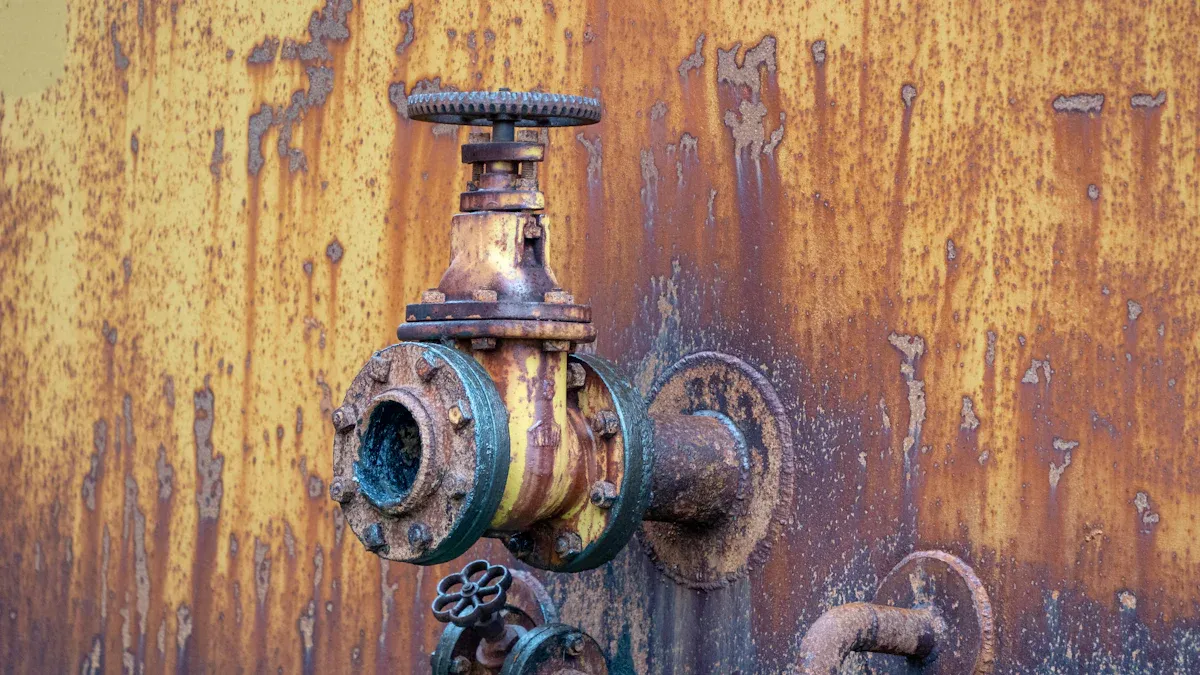
You will find two basic types of gate valves: parallel and wedge-shaped. A parallel gate valve uses a flat gate to control flow, while a wedge-shaped gate valve has a gate with an angled surface. Gate valves work well for handling slurries, heavy oils, molasses, and other viscous liquids. You can also use this type of valve as a shutoff valve.
Gate valves manage slurries and slow-moving fluids.
They suit heavy oils and molasses.
Gate valves act as shutoff valves in many systems.
There are two main types of gate valves. These are parallel and wedge-shaped. Each type works best for different jobs. The choice depends on pressure and fluid type.
Use parallel gate valves for smooth flow. They work well in low-pressure systems. These valves are easy to use. They are also simple to take care of.
Pick wedge-shaped gate valves for high-pressure jobs. They are good for high-temperature uses. These valves seal tightly. They also work well with corrosive fluids.
Look at special features of subtypes. These include knife, solid, flexible, and split wedge valves. Each subtype has its own benefits. They fit different needs.
Check your gate valves often. Keep them in good shape. This helps them last longer. Follow rules from experts for best results.
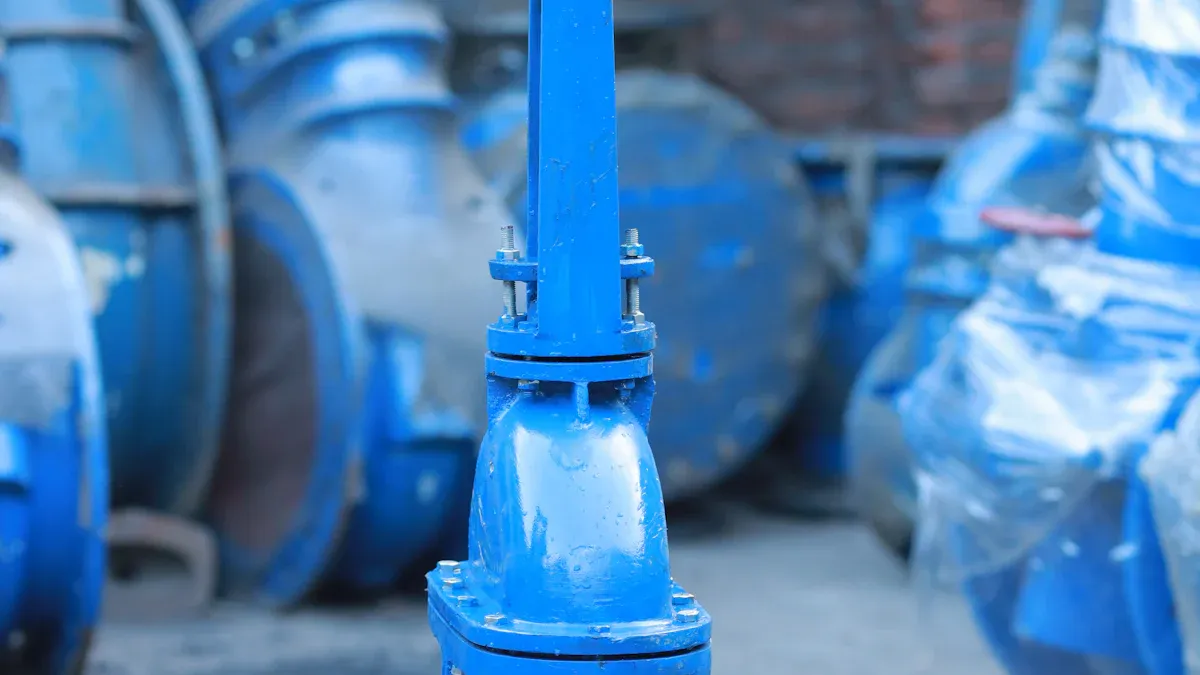
There are two main types of gate valves: parallel and wedge-shaped. It is important to know these types before picking a valve for your system. Each type has its own features and smaller groups for different uses.
Parallel gate valves have a flat gate that moves up and down. This controls how much fluid can pass through. These valves are good when you want easy use and a strong seal. The parallel design uses the fluid’s pressure or an outside force to push the gate against the seat. This means parallel gate valves are easier to turn because they need less force.
Tip: You can use parallel gate valves in big pipelines and systems with low pressure. They are used in water treatment, natural gas, chemical plants, oil storage, and petroleum.
Here is a table that lists the main materials for parallel gate valves:
| Material | Description |
| Steel | Most popular for industrial applications |
| Iron | Commonly used for water and HVAC applications |
| Stainless Steel | Used for corrosion resistance |
| Bronze | Known for its durability and resistance to corrosion |
| High Alloys | Includes materials like Hastelloy and Inconel for specialized applications |
Parallel gate valves can be made from steel, iron, stainless steel, bronze, or high alloys. These materials help the valve last longer and stop rust in tough places.
Parallel gate valves have a double-plate design. This helps the valve close tightly when pressure is added. You can use this type for fluids with particles or in systems that open and close often.
Wedge-shaped gate valves have a gate with an angled surface. The wedge shape makes a tight seal when the valve is closed. You need more force to turn this valve because the wedge pushes hard against the seat.
Note: Wedge-shaped gate valves are best for high pressure and high heat. They are good for corrosive fluids and places that need a strong seal.
Here is a table that shows the main differences between the two types:
| Feature | Wedge Gate Valves | Parallel Gate Valves |
| Gate Plate Design | Wedge-shaped gate that creates a tight seal when closed | Parallel double-plate structure that presses against the seat |
| Sealing Method | Achieves sealing through wedging action | Relies on medium pressure or external force for sealing |
| Operating Torque | Requires large torque due to fluid pressure and friction | Requires less torque, easier to operate |
| Suitable Applications | High pressure, high temperature, and corrosive media | Low pressure, large diameter, and corrosive media |
Wedge-shaped gate valves can handle pressure from Class 150 to 2500 LB and temperatures from -196°C to 570°C. There are different kinds of wedge-shaped gate valves, like solid wedge, flexible wedge, and double-disc wedge. Each kind has special features for sealing and lasting longer.
You should pick the type of gate valve based on your system’s pressure, temperature, and what fluid you use. Knowing the differences helps you choose the right valve for your job.
When you look at the different types of gate valves, you will see that each type has unique features. Understanding these features helps you choose the right valve for your system. Let’s explore the main subtypes you will find.
Knife gate valves belong to the parallel disks gate valve family. You will notice a sharp-edged gate in this type. The gate slices through thick fluids and solids with ease. This design stands out from other parallel disks gate valve options. The thin, rectangular or circular gate moves straight across the flow. This movement gives you a tight shut-off and keeps pressure drop low when the valve is open.
Knife gate valves work best for fluids with solids, slurries, or sticky materials. You can use them in tough jobs where other types of gate valves might fail.
Here is a table showing where you might use this type:
| Application Type | Reason for Preference |
| Paper Mills | Handles slurries and bulk materials well |
| Wastewater Treatment Plants | Reliable for thick, solid-filled fluids |
| Mining Operations | Shuts off bulk materials efficiently |
Solid wedge gate valves have a one-piece metal wedge. The wedge is thicker at the bottom. This shape blocks flow completely when you close the valve. You will find this type easy to install and maintain because of its simple gate valve construction. Solid wedge valves work best for clean fluids. They cost less than other types of gate valves, but you may need more maintenance in tough conditions.
You can use solid wedge valves in water supply lines and oil and gas systems.
They are not the best choice for fluids with debris.
Common problems with this type include:
High-speed gas can wear out the valve body.
Corrosion can damage seals and seats.
The valve may leak or become hard to turn if parts wear out.
A flexible wedge gate valve uses a special groove cut into the wedge. This groove lets the wedge bend a little. The flexibility helps the valve adjust to changes in temperature or small misalignments. You get a tight seal even when the system heats up or cools down. This type works well in places where temperatures change often.
You will see flexible wedge gate valves made with special elastomers like NBR or EPDM. The seat rings may use hard alloys such as Stellite or Inconel. These materials help the valve last longer and seal better.
Split wedge gate valves use two separate disks to form the wedge. Each disk can move sideways. This movement lets the disks press against the seats on their own. The design helps the valve seal better, even if the body changes shape or wears down.
| Feature | Description |
| Structure | Two independent disks form a composite wedge shape. |
| Functionality | Disks move sideways for better contact and sealing. |
| Advantages | Adjusts to seat angle changes and body strain, handles minor wear well. |
You should use this type when the pipeline might bend or strain the valve body. Split wedge gate valves work well for non-condensing gases and liquids that need a tight shutoff. They also perform better than solid wedge types when you worry about thermal binding.
When you compare the different types of gate valves, you will see that each type fits a special need. You can choose a rising stem gate valve or a non-rising stem gate valve for any of these subtypes, depending on your space and operation needs. Gate valve construction and the choice between parallel disks gate valve or wedge types will affect how well your system works.
There are clear differences between the two main gate valves. Their structure, sealing, and flow control make them different. Here is a table to help you compare:
| Feature | Wedge-Shaped Gate Valve | Parallel Gate Valve |
| Flow Control | Good sealing, handles high pressure | Low pressure drop, smooth flow |
| Operating Torque | Needs high torque, larger actuators | Lower torque, easier to operate |
| Sealing Principle | Wedging action for forced sealing | Uses media pressure or force for sealing |
| Sealing Reliability | Reliable at high pressures | Good for low-pressure, bidirectional sealing |
| Application Suitability | High pressure, high temperature, corrosive media | Water treatment, food and beverage processing |
Parallel gate valves let fluid move in a straight line. This means the flow is smooth and pressure does not drop much. Wedge-shaped gate valves use a tight seal. This makes them good for jobs with high pressure.
Each type has things it does well and things it does not. You should know these before you pick one.
1. Wedge-shaped gate valves:
Seal very well and work under high pressure.
Handle changes in temperature and pipe stress.
Might need more fixing because the gate can stick, especially when hot.
Need more force to turn and are not great for thick fluids with solids.
2. Parallel gate valves:
Give smooth flow and are easy to use.
Need less fixing and last longer.
Work best in low-pressure systems and with fluids that have particles.
May not seal as tight as wedge-shaped valves in high-pressure jobs.
Tip: Check how much fixing each type needs. Parallel gate valves usually jam and wear out less.
When you pick a gate valve, think about what your system needs. Here are some steps to help you choose:
1. Check how big your pipe is and the pressure.
2. Look at the fluid’s temperature, if it is corrosive, and if it has solids.
3. Pick the right materials for the valve and seal.
4. Decide how you want to connect the valve.
5. Choose if you want to open it by hand or by machine.
6. Think about space and pick a rising or non-rising stem.
Industry rules like API and ASME help you decide. Wedge-shaped gate valves are good for high pressure and high heat. Parallel gate valves are better for water treatment and when you want smooth flow. Always match the valve type to your job for the best results.
You now know about the two main gate valves: parallel and wedge-shaped. Parallel gate valves are best for smooth flow and low pressure. Wedge-shaped gate valves seal tightly for high-pressure work. Look at this table to see how much each type costs:
| Valve Type | Cost Level |
| Solid/Flexible Wedge Gate | Lowest Cost |
| Slab Gate | Moderate Cost |
| Split Wedge Gate | Moderate Cost |
| Double Disc Parallel Gate | Highest Cost |
When picking a valve, keep these things in mind: Check how the valve seals and if it can bend a little. Make sure the valve fits your fluid and pressure. Do not choose the wrong size or material. Plan to check your valves often so they last longer.
Tip: Always use industry rules to stay safe and make your valves last longer.
You use a gate valve to start or stop the flow of liquid in a pipeline. It works best as a shutoff valve. You should not use it to control flow speed.
You look at your system’s pressure, temperature, and the kind of fluid. For high pressure, pick a wedge-shaped gate valve. For smooth flow and low pressure, choose a parallel gate valve.
Yes, you can use gate valves for both. You should check the valve material and design to match your fluid or gas. Some types work better for thick liquids or slurries.
You should check and clean your gate valves at least once a year. If you use them in tough jobs, inspect them more often to prevent leaks or sticking.
| Feature | Rising Stem | Non-Rising Stem |
| Stem Movement | Moves up and down | Stays in place |
| Visual Position | Easy to see open/close | Harder to see |
You pick based on space and how you want to check the valve.
Gate valves are essential components in various industrial applications, serving as crucial elements for controlling fluid flow in pipelines. Understanding the basic types of gate valves is imperative for engineers and professionals involved in the design and maintenance of piping systems. This article delves into the two fundamental types of gate valves, providing a comprehensive analysis of their structures, functionalities, and applications. By exploring these Gate Valves, we aim to enhance your knowledge and assist in selecting the appropriate valve type for specific industrial needs.
The rising stem gate valve, also known as the outside screw and yoke (OS&Y) valve, features a threaded stem that moves vertically as the valve is operated. When the valve is opened, the stem rises above the handwheel, providing a visual indication of the valve's position. This design simplifies maintenance and allows for easy lubrication of the stem threads. The rising stem gate valve is widely used in applications where space is not a constraint, and visual monitoring of the valve position is essential. Its straightforward design ensures reliability and ease of operation.
The valve consists of a gate—typically a wedge-shaped metal piece—that moves up and down perpendicular to the flow direction. The stem is connected to the gate and threaded into the bonnet. Rotating the handwheel turns the stem, causing the gate to lift or descend, thus opening or closing the valve. The rising stem design ensures that the stem threads are isolated from the fluid, reducing the risk of corrosion and wear.
One of the primary advantages of the rising stem gate valve is the visible stem position, which indicates whether the valve is open or closed. This feature is valuable in large industrial settings where quick assessments are necessary. Additionally, the external threads are easier to lubricate and inspect. These valves are suitable for a range of applications, including water supply systems, wastewater treatment plants, and in industries like oil and gas where reliable isolation is required.
The non-rising stem gate valve, or inside screw valve, features a stem that rotates within the valve body without changing its vertical position. The gate moves up and down along the stem threads inside the valve body. This design is beneficial in applications with limited vertical space, as the stem does not extend beyond the valve body when operated. However, it lacks the visual position indicator provided by the rising stem design.
In non-rising stem gate valves, the stem threads are exposed to the medium flowing through the valve. The handwheel attaches directly to the stem, and turning it moves the gate up or down internally. Since the stem does not extend outward, the valve occupies less space, making it ideal for underground installations or in confined environments.
The compact design of non-rising stem gate valves makes them suitable for subsurface installations like municipal water and gas lines where vertical space is constrained. They are also used in shipbuilding and other applications where overhead space is limited. The enclosed stem protects it from external damage, but maintenance can be more challenging due to the stem's exposure to the flow medium.
When choosing between rising and non-rising stem gate valves, several factors need to be considered, including space availability, maintenance requirements, and the nature of the fluid being controlled. Rising stem valves offer ease of maintenance and clear visual indicators, making them suitable for above-ground installations. In contrast, non-rising stem valves are preferable in confined spaces and when external indicators are unnecessary.
Maintenance plays a critical role in the longevity and performance of gate valves. Rising stem valves allow for easier access to the stem for lubrication and inspection, reducing downtime and maintenance costs. Non-rising stem valves may require more frequent inspections due to the stem's contact with the flow medium, which can lead to corrosion or wear, especially if the medium is corrosive or contains particulates.
The operational efficiency of gate valves depends on their ability to provide a tight seal with minimal pressure drop when open. Both valve types perform effectively in this regard. However, the choice between them may impact the ease of operation in specific settings. For instance, rising stem valves require more vertical space to accommodate the extended stem when open, which could be a limitation in certain installations.
Gate valves are manufactured using various materials, including cast iron, stainless steel, and forged steel, to suit different industrial environments. Material selection is vital to ensure compatibility with the fluid and operating conditions. Stainless steel gate valves, for example, offer superior corrosion resistance and are ideal for industries handling aggressive chemicals or requiring strict hygiene standards.
Beyond the basic types, there are specialized gate valves designed for specific applications, such as knife gate valves used in systems handling viscous fluids or slurries. These valves feature a sharp edge to cut through deposits and ensure reliable operation. Additionally, pressure-sealed gate valves are used in high-pressure environments, emphasizing the importance of selecting the right valve type based on application requirements.
Proper installation and operation of gate valves are crucial for optimal performance and longevity. Ensuring the valve is installed in the correct orientation and that the pipeline is adequately supported can prevent unnecessary stress on the valve components. Regular operation and maintenance checks can identify potential issues early, reducing the risk of valve failure.
Common failures in gate valves include leakage due to seat wear, stem corrosion, and gate deformation. Implementing routine maintenance schedules, such as periodic lubrication and inspection of moving parts, can mitigate these risks. Selecting valves with appropriate materials and protective coatings based on the fluid characteristics also enhances durability.
In the oil and gas industry, gate valves are instrumental in controlling the flow of crude oil and natural gas. For example, rising stem gate valves are often used in refinery applications where it’s essential to know the valve position at a glance. Conversely, municipal water systems frequently utilize non-rising stem gate valves for underground pipelines due to space constraints.
A case study in a petrochemical plant showed that switching to stainless steel rising stem gate valves reduced maintenance costs by 30% over five years. The improved corrosion resistance and ease of maintenance contributed to less downtime and greater operational efficiency. This example underscores the importance of material selection and valve type in long-term operational planning.
Understanding the two basic types of gate valves—rising stem and non-rising stem—is essential for the effective design and operation of piping systems across various industries. Each type offers distinct advantages that make it suitable for specific applications. By carefully considering factors such as space constraints, maintenance requirements, and fluid characteristics, engineers can select the most appropriate Gate Valves to ensure efficient and reliable system performance.
Investing time in the proper selection and maintenance of gate valves not only enhances operational efficiency but also contributes to safety and cost savings in the long run. As industries continue to advance, the development of new materials and valve designs will further optimize fluid control systems, highlighting the ongoing importance of gate valves in industrial applications.


