


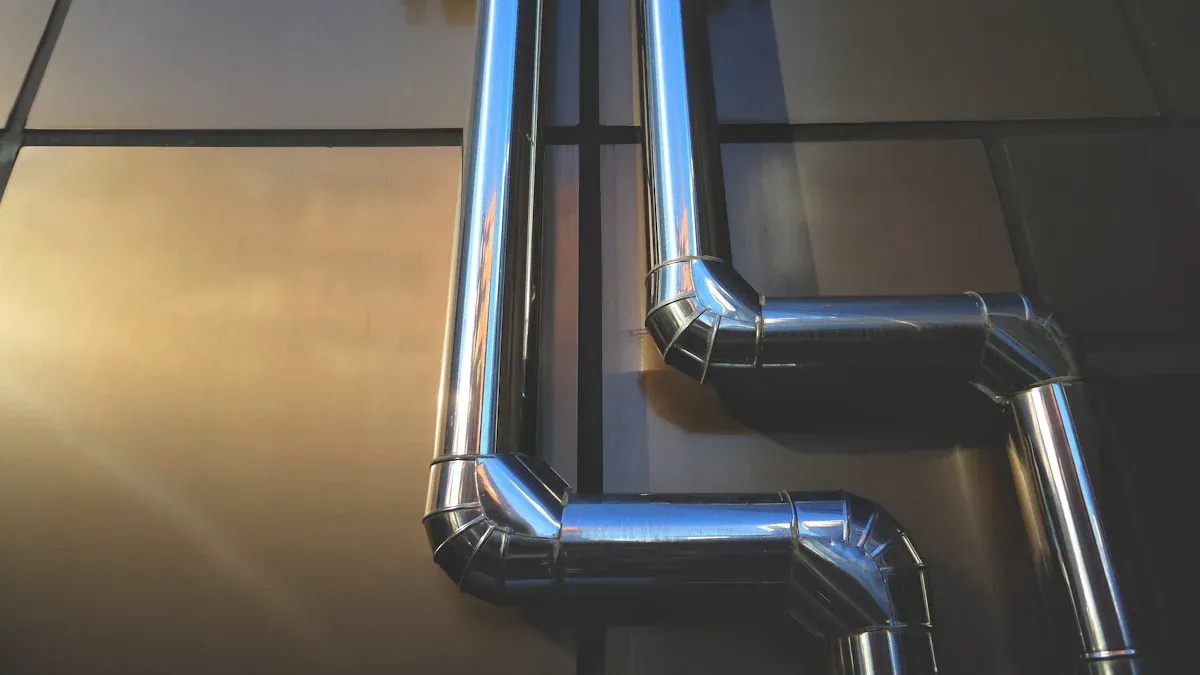
You use a stainless steel flange to connect pipes or equipment. It makes a strong and sealed link. The flange uses bolts to stop leaks. Stainless steel does not rust. It works well in hard places. Many workers in 2026 trust stainless steel flanges for safety. They also use them for good performance. You see stainless steel flanges in these industries:
| Industry | Description |
| Petrochemical Industry | Changes raw hydrocarbons into important chemicals. This helps things work better and last longer. |
| Food and Pharmaceutical Industry | Keeps products safe and high quality. It uses careful steps to meet health needs. |
| Architectural Decoration Industry | Mixes art with building skills. It makes things look nice and stay strong. |
Key Takeaways
Stainless steel flanges join pipes and equipment tightly. They stop leaks and help keep things safe.
These flanges do not rust or corrode. This makes them good for tough places like oil and gas work.
Flanges make maintenance simple. You can check and fix things fast without cutting pipes.
Picking the right flange type and grade is very important. This matters most when there is high pressure or heat.
Stainless steel flanges follow strict safety rules. They work well in many industries, like food and medicine.
Stainless Steel Flange Functions
Pipe and Equipment Connections
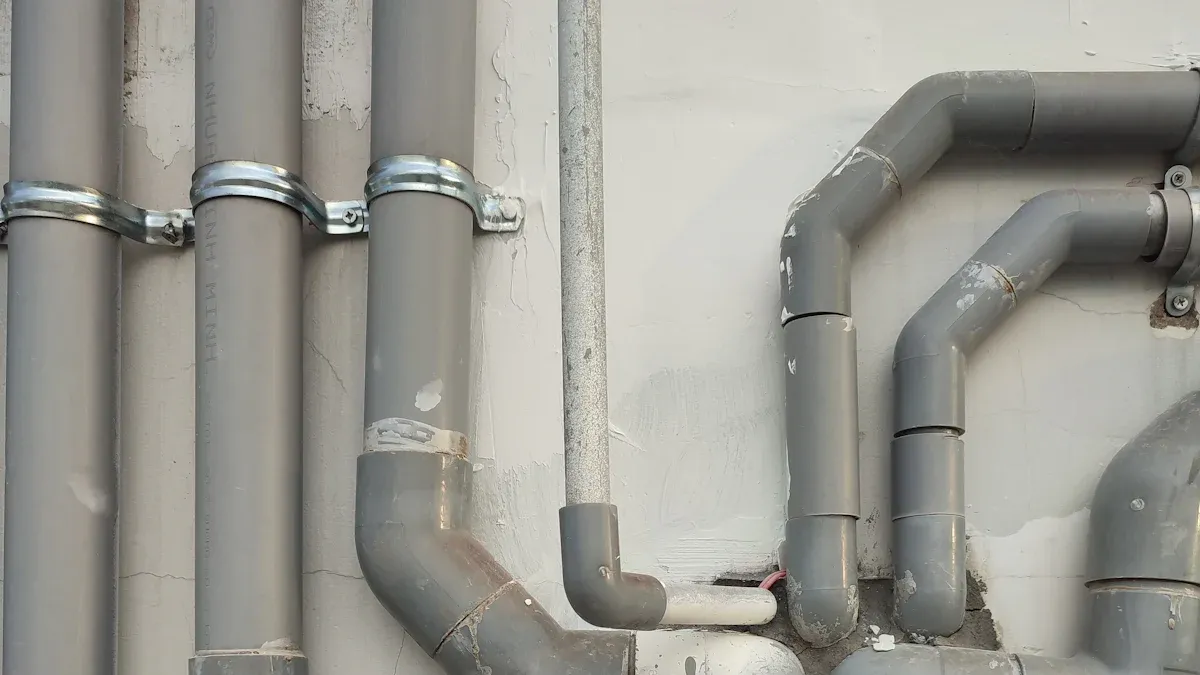
People use stainless steel flanges to join pipes, valves, and pumps. These flanges make strong and safe connections. They help keep pipelines working well. Using a flange lets you connect or take apart parts fast. This saves time and helps fix things quickly.
Stainless steel flanges join two pipes or parts. They help control how fluids and gas move.
Flanges make it easy to put in or fix parts. The bolt holes let you take things apart without cutting pipes.
Flanges make piping systems stronger. They spread out pressure and stop leaks or breaks, even when pressure is high.
You see stainless steel flanges a lot in oil and gas work. They do not rust and last for years. These flanges are also used in chemical plants, power plants, and water treatment places. When you connect pipes and equipment, you follow these steps:
1. Clean the flange and pipe so there is no dirt or grease.
2. Line up the flange with the pipe and match the bolt holes.
3. Put in the bolts and tighten them evenly.
4. Put a gasket or sealant between the flange faces.
5. Check for leaks and tighten the bolts if you need to.
This way, your piping system stays safe and works well.
Tip: Stainless steel flanges are great for oil and gas pipelines. They can handle strong chemicals and very hot or cold temperatures.
Here is a table that shows why you can trust stainless steel flanges for good connections:
| Property | Description |
| Corrosion Resistance | Stainless steel flanges do not rust, which is important for oil and gas. |
| Strength | Flanges give more support to joints and welds in pipes. |
| High Temperature Resistance | Flanges can handle heat from 500 to 800 degrees Celsius. |
Sealing and Pressure Control
You need flanges to keep pipes sealed and safe. Stainless steel flanges use bolts to press a gasket between two surfaces. This makes a tight seal that stops leaks. In oil and gas work, even small leaks can be a big problem. Flanges help stop these problems.
When pressure goes up, the bolts stretch a little. If you use the right gasket, the seal stays tight. This keeps your system safe, even with high-pressure oil or gas. You can trust stainless steel flanges to keep everything safe, from chemical plants to oil pipelines.
Maintenance and Inspection Access
You want your pipes to work well all the time. Stainless steel flanges make this easy. You can take off a flange fast to check or clean inside a pipe. This saves time and money because you do not have to cut or change the pipe.
Flanges give you strong, removable connections. You can take them apart for repairs or upgrades.
Some types, like lap joint flanges, slide over the pipe and line up easily. This is good for checking oil and gas pipes often.
Regular checks keep oil and gas work safe. Stainless steel flanges help you do this with less work. You can count on these flanges to last a long time and help you avoid expensive repairs.
Types of Stainless Steel Flange
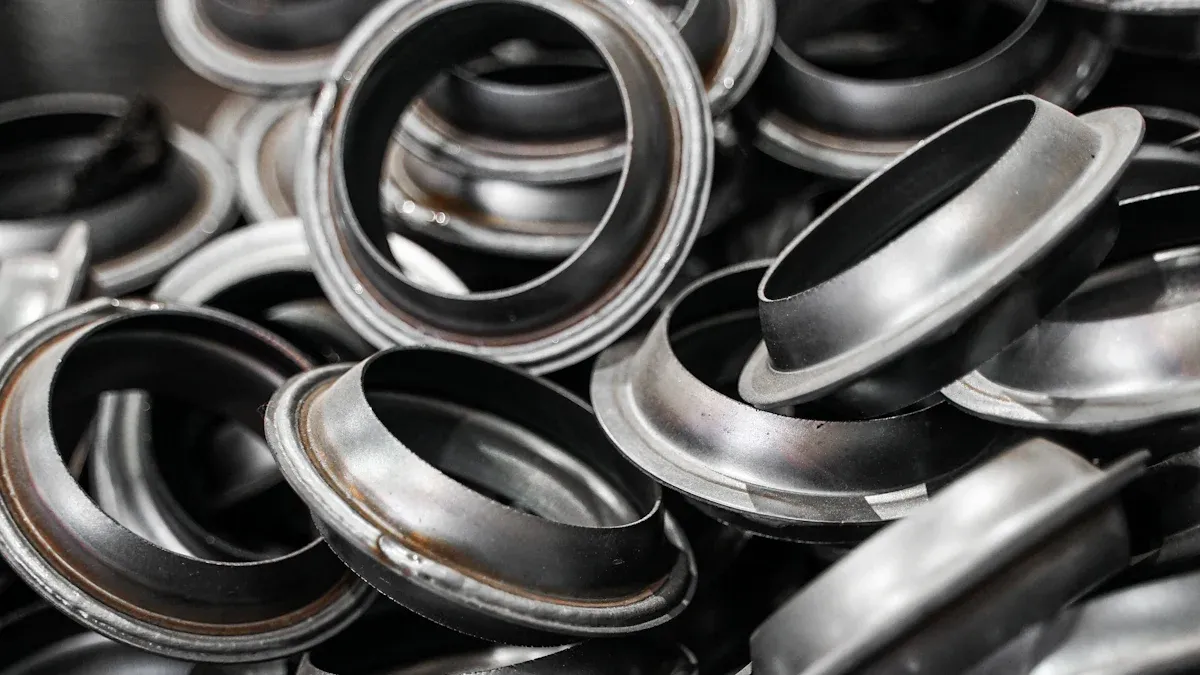
You can choose from many types of stainless steel flange for your project. Each type has a special shape and use. Here are the main types you will see in 2026:
Weld Neck
A weld neck flange has a long, tapered hub. You weld it to the pipe for a strong and smooth connection. This flange works best in high-pressure and high-temperature places. You often find it in oil and gas, chemical plants, and power stations. It gives you a safe seal and lasts a long time.
Note: Weld neck flanges are common in pipelines, refineries, and even food factories because they resist leaks and are easy to clean.
Slip-On
A slip-on flange slides over the pipe. You weld it on both sides to keep it in place. This type is easy to install and costs less than other types. You use it for low or medium pressure jobs, like water or air lines. The flange fits many pipe sizes and helps you finish work quickly.
| Feature | Description |
| Installation | Slides on pipe, welded inside and outside |
| Best Use | Low to medium pressure, general fluids |
| Cost | Lower than other types |
Blind
A blind flange looks like a solid disk. You use it to close the end of a pipe or a valve. This flange helps you stop flow when you need to test or fix a system. It works well in high-pressure and high-temperature jobs. You also use it in places that need to stay clean, like food or drug factories.
Socket Weld
A socket weld flange has a small step inside. You put the pipe into the step and weld it. This flange gives you a tight, leak-proof joint. It works best for small pipes in high-pressure systems, like boilers or chemical lines. You can trust this flange to stay strong under tough conditions.
Threaded
A threaded flange has threads inside the hole. You screw it onto a pipe without welding. This makes it easy to put on and take off. You use this flange in places where you need to connect and disconnect pipes often, like plumbing or HVAC systems.
Tip: Threaded flanges save you time because you do not need special tools or welding skills.
Specialty Types
Some jobs need a special flange. You can find flanges made for food and drink factories, or for very harsh chemicals. Some companies make flanges with extra strength or for very clean systems. These specialty flanges help you solve unique problems in your work.
"Brew Quality" flanges keep drinks safe and clean.
"Corrosion Weight" flanges last longer in harsh places.
Some flanges use special alloys for very hot or corrosive jobs.
You can pick the right flange for your system by knowing what each type does best.
Benefits of Stainless Steel Flange
Corrosion Resistance
You need good corrosion resistance in hard places. Stainless steel flanges give you this help. They have a lot of chromium and nickel. This keeps them from rusting or getting hurt by chemicals. You can use these flanges in chemical plants, water treatment, or oil and gas fields. These flanges also stop pitting and crevice corrosion. This keeps your system safe. You do not need to fix them much. Stainless steel flanges do not need a lot of care.
High chromium and nickel stop rust and damage
They fight pitting and crevice corrosion well
They are easy to weld, so they do not get brittle
You save money because they need little care
Durability and Strength
You want your pipes to last a long time. Stainless steel flanges are strong and tough. They last many years because they do not rust and have high strength. You do not have to change them often. Even if they cost more at first, you save money later. You do not need to fix them a lot. Stainless steel flanges are a "fit and forget" choice for many jobs.
They last longer because they are strong and do not rust
You have fewer breaks and less time fixing things
You spend less money over the years
You do not need to check them as much
Hygiene and Cleanability
You must keep things clean, especially for food or medicine. Stainless steel flanges help you follow strict rules for cleanliness. These flanges stop germs and keep your products safe. You can wash them easily, which is important for clean places. Stainless steel flanges meet world safety rules. You can trust them to keep important materials safe.
Tip: Use stainless steel flanges where you need things very clean. They help stop germs and keep your system safe.
Versatility in Applications
You can use stainless steel flanges in many jobs. They are strong and do not rust, so they work well in hard places like chemical plants or oil rigs. These flanges can handle high pressure and keep their shape. This is important for safety. You can find many sizes and shapes, so they fit almost any pipe system. Stainless steel flanges can help you with many problems.
Good for hard and tough places
Work well when pressure is high
Come in many shapes and sizes for different jobs
Specifications and Standards
Grades and Materials
You need to know what your flanges are made of before you choose them. Most flanges use stainless steel because it fights corrosion and lasts a long time. You see grades like 304, 316, and 321. Each grade has a different mix of metals. For example, 316 stainless steel has more nickel and molybdenum. This helps it resist corrosion from saltwater and chemicals. You use this grade for marine jobs or chemical plants. If you work in food or medicine, you want flanges that stay clean and do not rust. Some flanges use special alloys for very tough jobs. Always check the grade before you buy.
Size and Pressure Ratings
You must match the size and pressure rating of your flanges to your system. Flanges come in many sizes, from small pipes to very large ones. The pressure rating tells you how much force the flange can handle. If you use the wrong rating, your system could leak or break. You want to pick a flange that can handle the highest pressure in your system.
Here is a table to help you understand why pressure ratings matter:
| Aspect | Explanation |
| Pressure Class | Picking the right class keeps your system safe under pressure. |
| Gasket Compatibility | The gasket must match the pressure so it does not leak. |
| Structural Safety | Higher ratings mean thicker flanges and better strength. |
The pressure level of the flange must meet or go above the working pressure of your system.
Higher pressure ratings mean thicker flanges and stronger seals.
Good choices stop failures and keep your system safe.
Industry Standards
You need to follow rules when you pick flanges. Many countries have their own standards. These rules make sure your flanges fit and work well. In the USA, you see ASME B16.5 and ASTM A182. These cover sizes, materials, and tests for flanges. In Europe, you find DIN EN 1092-1 and BS EN 1092-1. China uses GB/T 9112-2010 and HG/T 20592-2009. Japan uses JIS B2220. Each standard helps you pick the right flange for your job.
Here is a table of common standards:
| Country/Organization | Standard | Description |
| USA | ASME B16.5 | Pipe flanges and fittings, ½ inch to 24 inches |
| USA | ASTM A182 | Forged stainless steel flanges |
| Germany | DIN EN 1092-1 | Steel flanges for pipelines and valves |
| UK | BS EN 1092-1 | European standard for steel flanges |
| China | GB/T 9112-2010 | General requirements for steel pipe flanges |
| Japan | JIS B2220 | Main standard for pipe flanges |
You must also think about where you use your flanges. Chemical plants need flanges that fight corrosion. Power plants need flanges that work under heat and pressure. Marine jobs need flanges that do not rust in saltwater. Always check the rules for your industry before you buy.
Tip: Following the right standard keeps your system safe and helps you avoid problems later.
You rely on stainless steel flanges to connect pipes and equipment safely. These flanges give you strong, leak-free joints that last for years. Stainless steel flanges resist corrosion, even in harsh places like offshore rigs or chemical plants. You spend less time on repairs because these flanges stay strong and do not rust. When you choose stainless steel flanges, you help your system run better and save money on maintenance.
Stainless steel flanges work well with water, chemicals, and acids.
They meet high standards for safety and performance.
You can trust stainless steel flanges for many jobs in 2026.
Always check the right size and grade for your needs. The right stainless steel flanges keep your work safe and reliable.
FAQ
What is the main purpose of a stainless steel flange?
You use a stainless steel flange to connect pipes or equipment. It creates a strong, leak-proof joint. This helps your system stay safe and work well in tough environments.
How do you choose the right stainless steel flange grade?
You check the fluid type, temperature, and pressure in your system. For salty or chemical-heavy jobs, you pick 316 stainless steel. For general use, 304 works well.
Can you reuse stainless steel flanges?
You can reuse a stainless steel flange if it shows no cracks or damage. Always inspect the flange and replace the gasket before reassembly.
Where do you see stainless steel flanges most often?
You find stainless steel flanges in oil and gas, chemical plants, water treatment, and food factories. These places need strong, rust-free connections.
How do you prevent leaks with stainless steel flanges?
You use the right gasket and tighten the bolts evenly. Always clean the flange faces before assembly. This keeps your system sealed and safe.
What is a stainless steel flange used for?
A stainless steel flange is a component used in piping systems to connect pipes, valves, pumps, and other equipment. Flanges provide a convenient method for the assembly and disassembly of piping components, making maintenance, repair, and modification of the system easier. Stainless steel flanges offer corrosion resistance and durability, making them suitable for applications in corrosive environments.
Connecting Pipes,Flanges are used to connect pipes in a piping system. By bolting two flanges together with gaskets in between, a tight and secure connection is created. This allows for easy assembly and disassembly of sections of the pipeline, facilitating maintenance and repairs.
Connecting Valves and Fittings,Flanges are commonly used to connect valves and fittings to pipes. This allows for the integration of various components into the system, and it simplifies the installation and removal of valves or fittings when necessary.
Facilitating Maintenance,Stainless steel flanges make it easier to perform maintenance activities on a piping system. When maintenance or repairs are required, sections of the pipeline can be disconnected by loosening the bolts connecting the flanges. This eliminates the need to cut or weld the pipe, saving time and resources.
Pressure Vessels,Flanges are used in the construction of pressure vessels. They provide a secure connection for nozzles and openings in vessels, ensuring a reliable and leak-free seal in high-pressure environments.
Connecting Equipment,Flanges are used to connect various types of equipment to a piping system, such as pumps, compressors, and heat exchangers. This allows for the integration of different components into a cohesive system.
Pipe Flange Types,There are different types of flanges, each serving specific purposes. Common types include weld neck flanges, slip-on flanges, socket weld flanges, threaded flanges, and blind flanges. The choice of flange type depends on the requirements of the application.
Corrosive Environments,Stainless steel flanges are preferred in corrosive environments because stainless steel is resistant to corrosion. This makes them suitable for use in industries such as chemical processing, petrochemical, and marine applications.

