Imagine a water-treatment skid with a small stainless steel line leading into a pump. The pump may need periodic inspection or replacement, but the adjacent pipe is fixed in place. The connection chosen during installation will affect how that equipment can be removed later. A threaded union and a straight threaded coupling can both join sections of pipe, yet they solve different assembly problems.
This is an illustrative maintenance scenario, not a description of a customer project. The actual connection must be chosen against the system drawing, operating conditions and installation procedure.
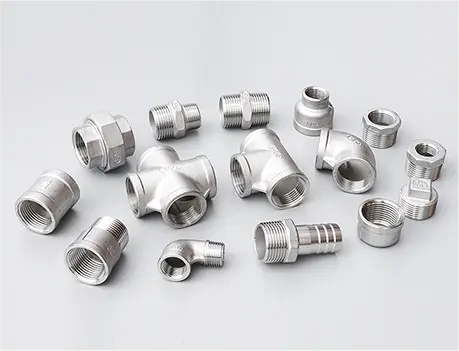
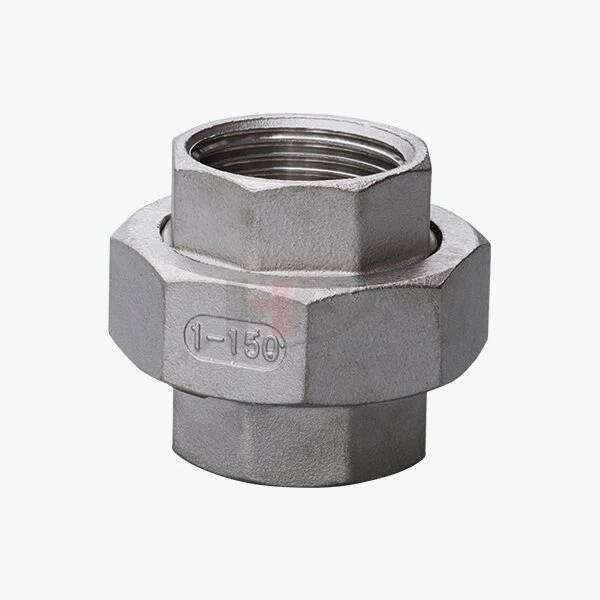
A stainless steel threaded union provides a separable joint. Its central nut allows the two sides of the joint to be released after the system has been isolated and depressurized. That can be useful beside equipment that must be removed without rotating a long run of installed pipe. Space around the nut matters: the installer needs room to reach it, separate the joint and move the equipment clear.
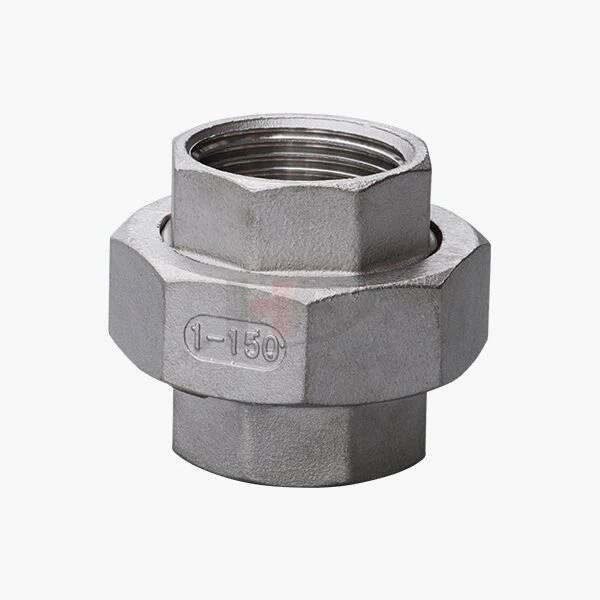
Lianhe threaded union, photographed on the product page. Confirm the union's exact end threads and sealing arrangement for the ordered model.
A straight threaded coupling connects two matching male-threaded ends. It is a straightforward choice where the line is being assembled and a component can be turned into place. It is less convenient as the only planned break point beside a fixed pump: separating a conventional straight coupling may require rotating or moving adjoining parts. The installation drawing should show where disassembly will occur, rather than leaving that decision until maintenance day.
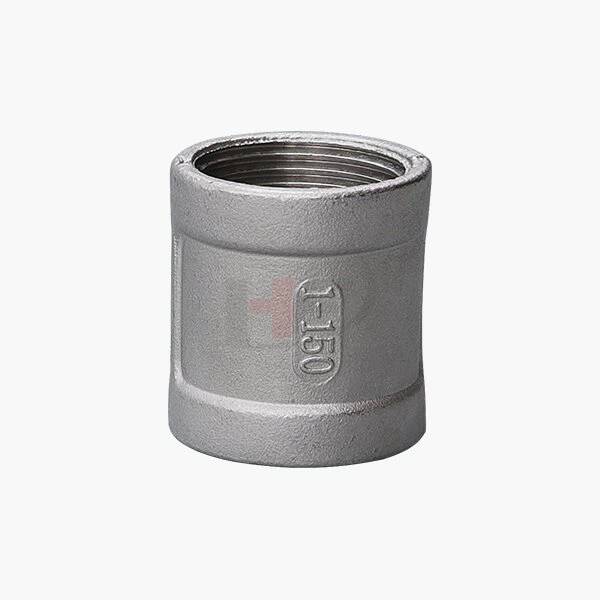
Lianhe straight threaded coupling, photographed on the product page. The pictured marking is not a complete system pressure rating.
| Decision point | Threaded union | Straight threaded coupling |
|---|---|---|
| Main role | Creates a planned point for separating the line | Joins two compatible threaded ends |
| Equipment removal | Can be opened at its joint after safe isolation | Adjacent parts may need to be rotated or moved |
| Space to reserve | Access to the nut and clearance to withdraw equipment | Space for installation and any later disassembly method |
| Specification to confirm | End threads, joint seal design and reassembly instructions | End threads, engagement and thread-sealing method |
The table describes the connection layout, not a blanket performance ranking. A union does not replace an isolation valve, and neither fitting should be opened while the line is pressurized. Before servicing, follow the site's isolation, draining and lockout procedure.
Thread designation is one of the first details to settle. NPT, BSPT and parallel pipe threads are not interchangeable merely because their nominal sizes look alike. Confirm the thread form and mating component from the drawing or a measured sample. ASME B1.20.1, for example, covers the dimensions and gaging of NPT and several other inch pipe threads; it does not turn every nominally similar pipe thread into a compatible connection.
Then check the medium, operating pressure and temperature, material grade and the selected sealing method. A union's internal joint may use a particular seat or seal design, while a tapered threaded end has its own installation requirements. Ask for the actual product drawing and the manufacturer's instructions for the selected size and construction. If the line handles an aggressive medium or requires traceability, state the material and document requirements in the purchase inquiry. Do not infer these from a photograph or a general product title.
Finally, plan for physical access. The union should be positioned so that maintenance staff can reach the nut and withdraw the pump or filter after the line is made safe. Supports and equipment weight must be dealt with in the maintenance plan; the fitting is not a lifting point or a substitute for pipe support.
For this kind of installation, send the supplier a small layout drawing that marks the fixed pipe, removable equipment and intended break point. Add the required size and thread standard, material grade, medium, pressure and temperature, sealing requirements, quantity and any required material or inspection documents. If the existing thread is uncertain, send a clear photograph with a measured sample or drawing before ordering.
Lianhe offers both the threaded union and straight threaded coupling. The correct choice depends on where the line must separate during the equipment's service life. Share the layout and operating requirements through the inquiry page so the connection can be checked as part of the complete assembly.