A utility-water line feeds equipment through a compact Y-strainer. After a period of operation, the available flow falls. Should the screen be cleaned, a larger strainer be fitted, or the pump be investigated? The useful starting point is evidence from the line, rather than the shape or nominal size of one component.
The questions below describe a typical industrial maintenance problem. They are not a report of a customer installation. The same reasoning can help a purchasing team explain the operating conditions before ordering a replacement.
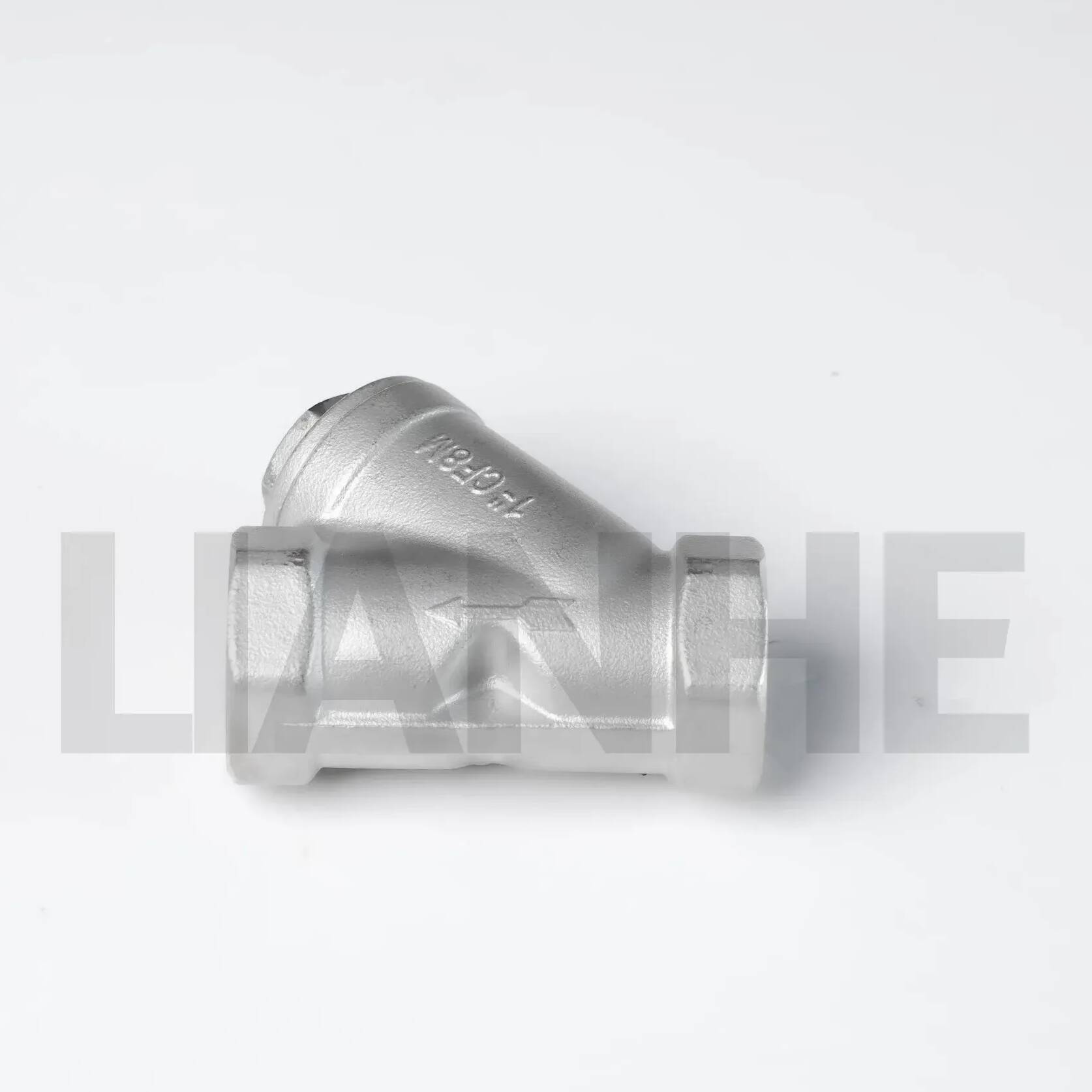
Lianhe threaded Y-strainer, shown as a product photograph. Establish the installed orientation and flow direction from the actual product and its instructions.
A Y-strainer retains solid debris in a screen. As debris accumulates, the available flow area can become restricted. That makes screen fouling a possible explanation for a change in performance, but lower flow alone does not locate the restriction.
Where suitable pressure measuring points are provided, compare the pressure difference across the strainer with the clean-screen condition at a comparable flow rate. Record the operating state as well: different pump speeds, valve positions or flow demands can change the readings. A single downstream pressure reading cannot establish the pressure loss across the strainer.
| What the operator observes | What to establish before choosing a remedy |
|---|---|
| Flow falls and the measured loss across the strainer rises under comparable conditions | Whether the screen has accumulated debris and needs service |
| Low flow begins immediately after a new screen is fitted | Whether the opening, free screen area and clean pressure loss suit the duty |
| The strainer requires frequent cleaning | The nature and quantity of incoming solids, and whether the strainer arrangement suits that loading |
| Flow remains low after the screen is serviced | Other restrictions and the pump or control conditions, rather than assuming the strainer is the only cause |
The observations guide investigation; they do not replace the equipment manufacturer's operating limits or a system assessment. Agree the allowable pressure loss and maintenance trigger for the selected strainer, screen and duty.
Only if its particle retention matches what the downstream equipment needs and the resulting pressure loss remains acceptable. An unnecessarily fine screen can create an avoidable maintenance burden. Selecting only by the pipe connection size leaves the screen duty unresolved.
Ask which particle size the downstream equipment needs to be protected from. Then specify the screen opening and construction. A mesh count alone is incomplete: the opening also depends on wire diameter. For a perforated screen, specify the hole size. Request pressure-loss information for the proposed body size and screen at the required water flow, rather than borrowing a curve from a different strainer model.
If the solids load is high or maintenance interruptions are difficult to accommodate, the system designer may need to consider another strainer arrangement. A compact Y-body is not automatically the best choice for every water service.
Yes. The cover and screen need accessible space for removal. A strainer hidden against a wall or directly above other equipment may be easy to connect and difficult to service.
Check the body's flow-direction marking and follow the selected model's installation instructions. Y-strainer guidance commonly places the pocket downwards on horizontal liquid lines; steam or gas arrangements can differ. Do not use the orientation of a catalog photograph as an installation drawing.
Before opening the cover, isolate the equipment, release trapped pressure, drain and allow it to cool as required by the fluid and site procedure. Follow the manufacturer's screen, seal and reassembly instructions. Do not assume that a photographed cover includes a blowdown connection or permits cleaning while pressurized.
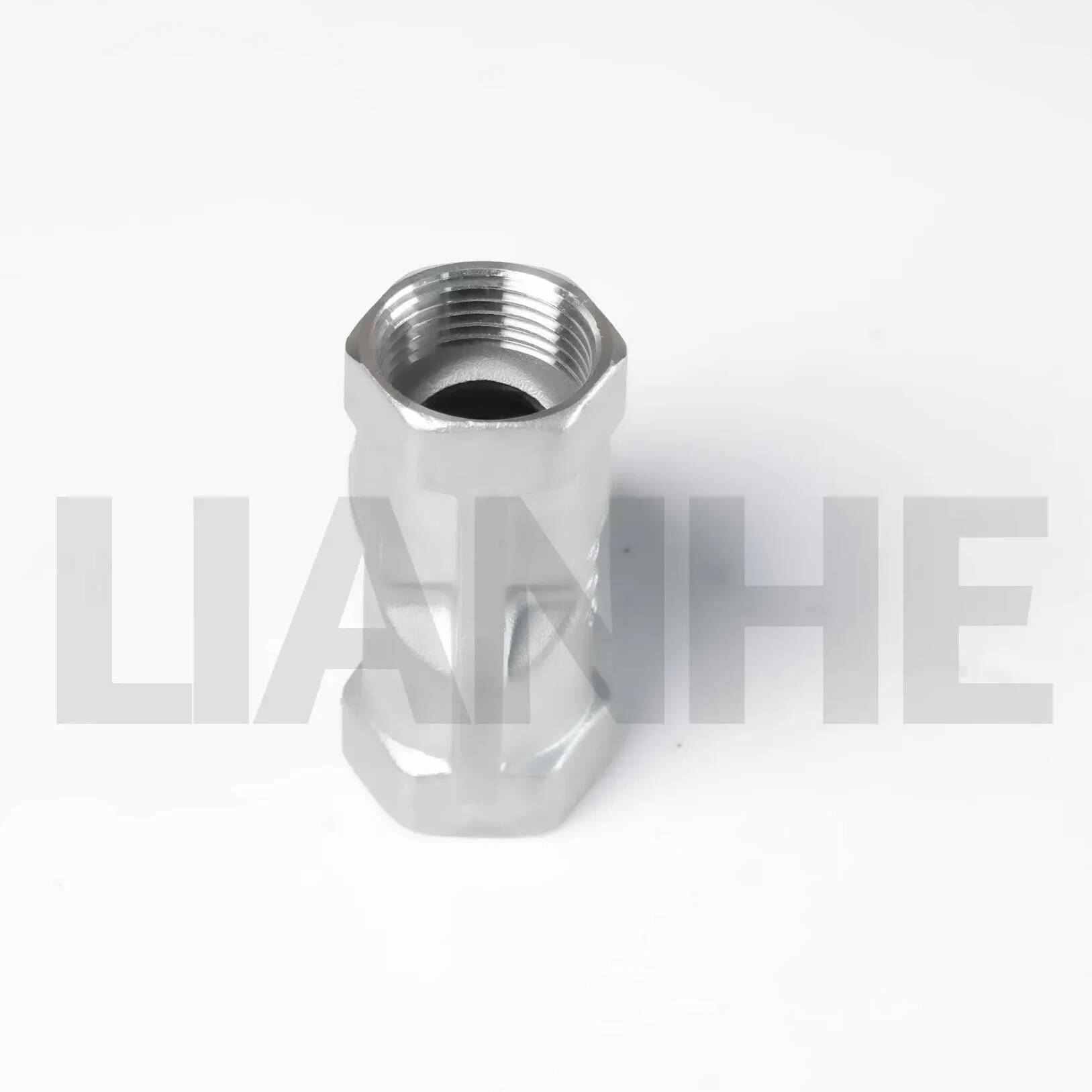
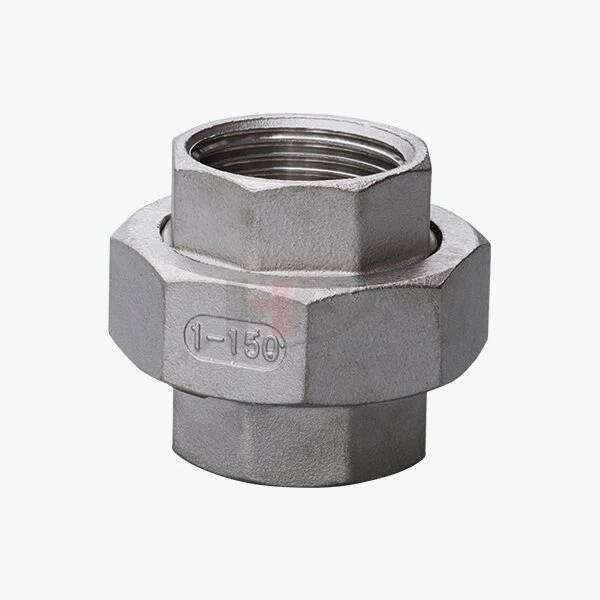
Threaded-end detail from the same Lianhe product page. Confirm the mating thread standard and size; a photograph does not establish either.
Send the normal and maximum flow, water temperature, operating pressure and allowable pressure loss, together with the pipe size and thread standard. Describe the solids and the equipment being protected. Include the required body and screen materials, screen opening, cleaning access and any material or inspection documents needed for the order.
For an existing installation, add a layout photograph, the current screen specification and pressure readings taken under stated operating conditions. This allows the discussion to address both retention and flow performance. A strainer collects solid debris; it does not by itself remove dissolved substances or establish water purity.
Lianhe's stainless steel threaded Y-strainer uses a removable screen and female threaded connections. Share the duty and connection details through the inquiry page so the size, materials, screen and operating limits can be confirmed for the order.